
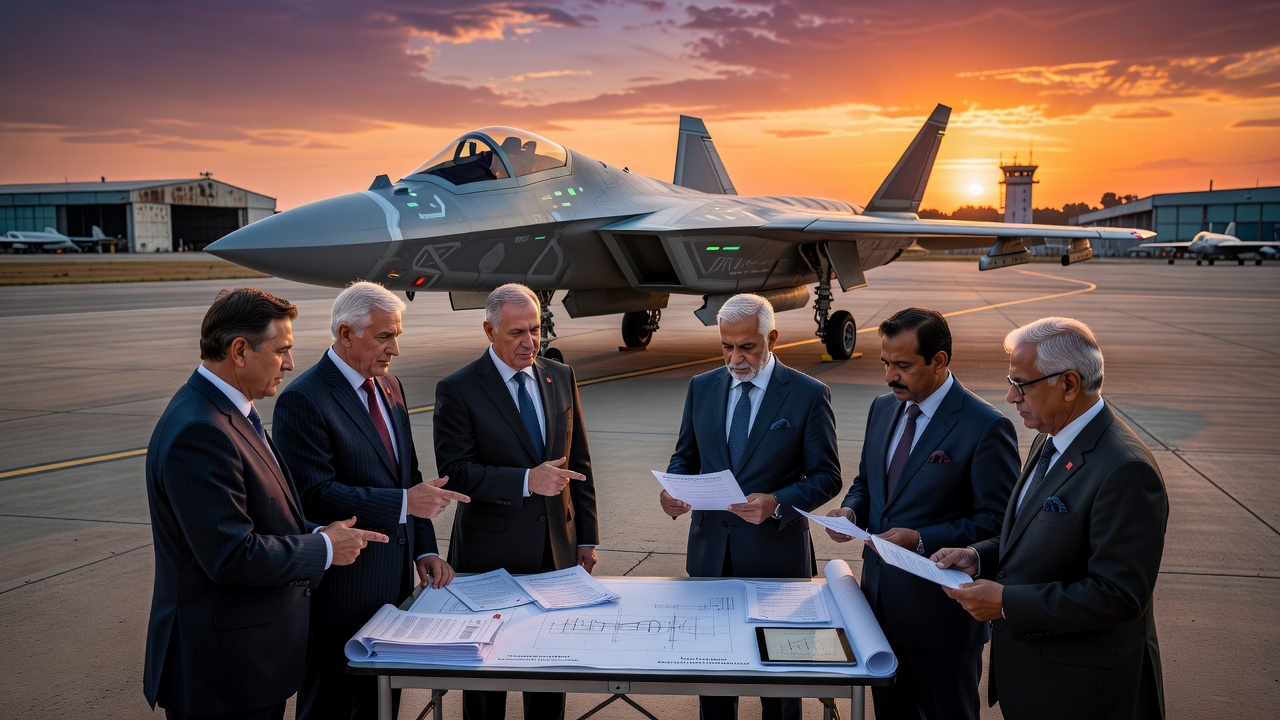
Moscow is once again trying to interest India in its Su-57 stealth fighter, pairing the offer with promises of technology sharing and a path toward local assembly. India, for its part, has shown no sign of reopening the door. The two countries once ran a joint program to build a fifth-generation jet together, and its collapse still shapes how Delhi views every subsequent pitch.
A Partnership That Already Failed Once
India walked away from the Fifth Generation Fighter Aircraft programme with Russia in 2018, after years of friction over what New Delhi was actually getting for its investment. Indian officials at the time raised concerns about the aircraft's stealth characteristics, the maturity of its engines, and the overall cost of staying in the project. Those complaints were not minor technical quibbles - they went to the heart of what a fifth-generation fighter is supposed to deliver: low radar visibility, advanced sensors, and engines built for sustained high-performance flight. When a partner nation questions all three at once, the relationship is effectively over, even if formal ties linger.
That history matters now because Russia's renewed offer arrives without clear answers to the original objections. Questions about how many Su-57s have actually entered service, how deliveries have progressed, and how the jet has performed in real combat conditions remain largely unresolved in open reporting. For a country like India, which is shopping for a multi-decade defense commitment, ambiguity on production and performance is not a minor inconvenience - it is a central risk factor.
Why India Is Betting on Its Own Program Instead
India's current posture leans heavily on the Advanced Medium Combat Aircraft, its indigenous fifth-generation project. Moscow frames the Su-57 as a sensible interim solution - something to field while the AMCA matures. But that framing underestimates how much strategic weight India now places on domestic capability. Building a fighter jet at home is not simply about hardware; it is about retaining control over design decisions, supply chains, and future upgrades rather than being dependent on another nation's industrial priorities.
This is not a uniquely Indian calculation. Countries investing in advanced defense technology increasingly weigh sovereignty and long-term industrial benefit alongside raw capability. A fighter jet purchased off a foreign production line comes with obvious near-term advantages - speed, proven airframes - but it also comes with dependency: on spare parts, software updates, and the exporting country's willingness to keep supporting the platform decades down the line.
What the Repeated Offers Signal
Russia's persistence says as much about its own defense-export position as it does about India's air force needs. Losing a partner as large as India on a flagship fighter program is a significant blow to any arms exporter's credibility and order book. Repeated outreach, including the suggestion of local production, is a recognizable pattern in the defense industry when a supplier is trying to rebuild trust after a partnership breakdown - offering more favorable terms, more technology transfer, more local involvement, in hopes of overcoming a track record that speaks against it.
- India's 2018 exit from the joint fighter program centered on stealth, engine, and cost concerns
- Su-57 production figures, delivery timelines, and combat performance remain contested points
- Russia positions the aircraft as a stopgap ahead of India's AMCA
- India continues to prioritize indigenous fifth-generation development over renewed foreign partnership
For now, the gap between Moscow's offer and Delhi's strategy looks structural rather than negotiable. Unless Russia can produce verifiable answers on production scale and combat record, repeating the pitch is unlikely to change India's calculus.