
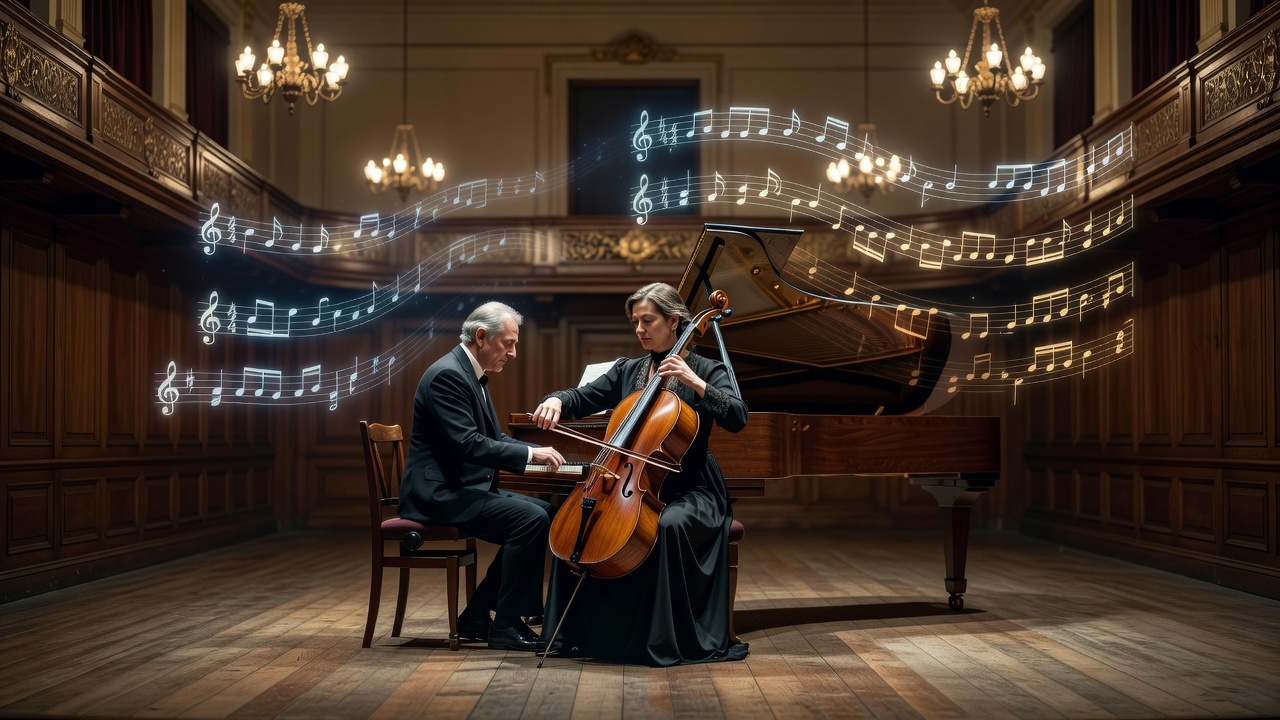
Sol Gabetta's partnership with fortepianist Kristian Bezuidenhout centers on a deceptively simple idea: trace how three composers working within a few decades of one another reimagined what the cello could express. The first half of their shared recital turns to Robert Schumann and Felix Mendelssohn, whose mid-nineteenth-century works pushed the instrument beyond its accompanying role and into genuine dialogue with the keyboard. The programme closes with Brahms's Cello Sonata No. 1 in E minor, a work that depends entirely on the kind of conversational balance these two musicians have built their reputations on.
A Clarinet Piece Finds a Second Life
Schumann's *Fantasiestücke* were written with the clarinet in mind, but the composer himself sanctioned an alternative path, allowing cellists to claim the three pieces as their own. That gesture matters more than it might first appear. Romantic composers rarely handed performers this kind of interpretive latitude, and the result is a set of miniatures that sit comfortably in the cello repertoire today, prized for their shifting moods and their refusal to settle into a single emotional register. Gabetta's advocacy for Mendelssohn's cello works has long been a defining feature of her career, and pairing that commitment with Schumann's flexible instrumentation gives the recital's first half a coherent argument: this is music built on intimacy rather than display.
Fortepiano as Equal Partner
Bezuidenhout's presence changes the equation. A fortepiano, lighter and more transparent in tone than a modern concert grand, forces a different kind of listening from both performer and audience. Balance between cello and keyboard becomes less about volume and more about texture, which suits repertoire written before the modern piano's full weight had become standard. This is not a nostalgic gesture; it is a legitimate interpretive choice that reframes familiar scores, asking what Schumann and Brahms might have actually heard when they composed for the instruments available to them.
Brahms and the Weight of Dialogue
The Sonata No. 1 in E minor closes the programme because it demands the trust the first half has already built. Brahms wrote a work in which neither instrument dominates; the cello's lyrical lines and the piano's dense counterpoint depend on constant negotiation. That structural demand is precisely why the sonata rewards duos who have spent real time together, rather than pairing soloists for a single evening. Placing it after Schumann and Mendelssohn is not incidental programming. It traces a direct line from the Romantic miniature to the mature chamber sonata, showing audiences how quickly the cello's expressive range expanded across a single generation of composers.