
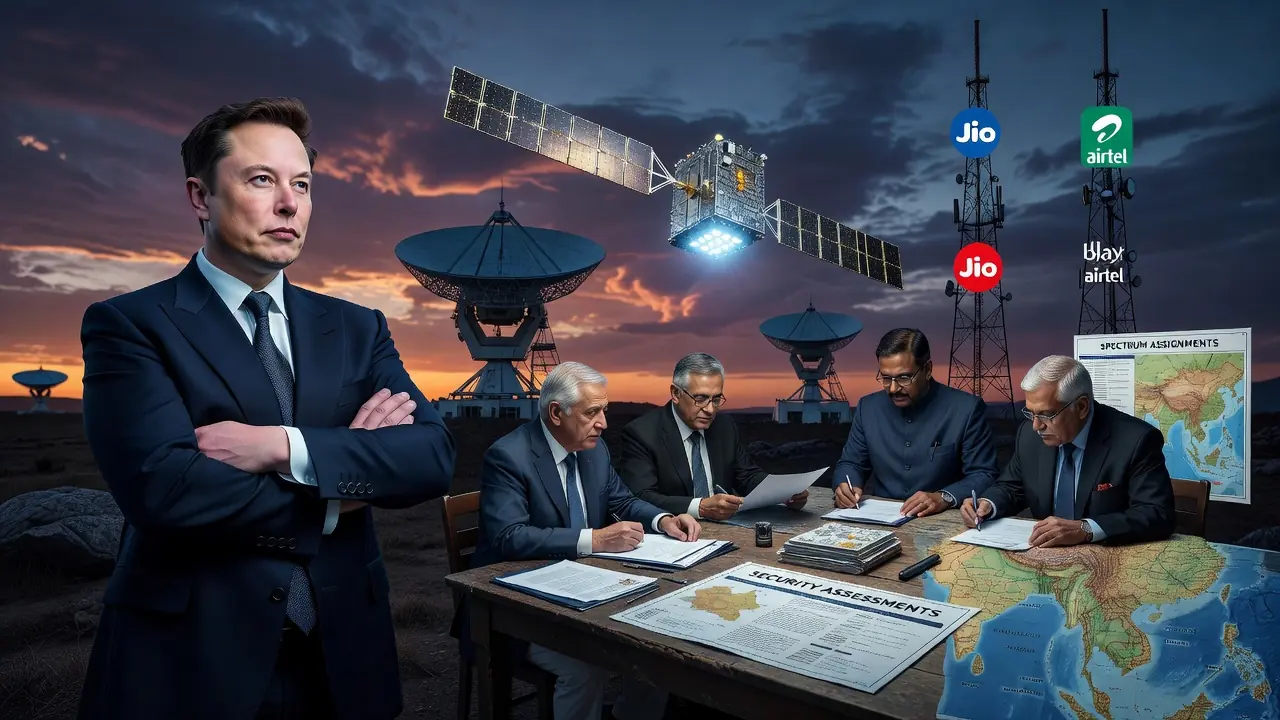
India's telecommunications ministry pushed back on Thursday against claims that its satellite internet licensing process favors domestic business interests, responding directly to Elon Musk's accusation that unnamed "oligarchs" are blocking Starlink's entry into the country. The exchange brings a long-running dispute over spectrum allocation and market access back into public view, four years after SpaceX first sought approval to operate in India.
What Musk Alleged and What India Said
Musk wrote on X that Starlink was being obstructed by oligarchs seeking to protect a "monopolistic chokehold" on Indian consumers, though he stopped short of naming anyone. The remark landed squarely in the direction of India's two dominant telecom operators, Reliance Jio and Bharti Airtel, both of which have launched their own satellite broadband ventures and compete directly with Starlink for the same spectrum and regulatory approvals. India's telecom ministry rejected the framing outright, stating that Starlink, Jio's satellite arm, and Airtel's venture are all at broadly the same regulatory stage, each undergoing security assessments. The ministry called suggestions of unfair treatment "baseless and misconceived," though it declined to name any of the three companies or address Musk's comments directly.
A Market Worth Billions, Still Waiting on Spectrum
The underlying prize explains the intensity of the dispute. Deloitte has projected India's satellite broadband market could reach $1.9 billion by 2030, a figure significant enough to draw serious competitive interest from both domestic conglomerates and foreign operators. Yet none of the three companies currently holds final clearance to begin commercial service. Spectrum assignment, the regulatory step that determines which frequencies operators can use to deliver signal, remains unresolved for all parties. This is not simply a licensing technicality: spectrum allocation in India has historically been a flashpoint, with earlier disagreements between Musk and the Ambani-Mittal camp over whether satellite spectrum should be auctioned or administratively assigned. That fight was set aside in 2025 when the three parties struck separate distribution agreements for Starlink hardware in India, a truce that now appears strained again.
Security Reviews and a Trade Backdrop
Security scrutiny has shadowed Starlink's path in India since authorities recovered its equipment in two unrelated operations in late 2024 - a drug seizure in the Andaman and Nicobar Islands and an army search operation in Manipur. Musk responded at the time by insisting Starlink's satellite beams were switched off over Indian territory, a claim he repeated this week, adding that the service had never actually been active there in the first place. Those incidents have fed into broader government caution about granting foreign satellite operators unrestricted access, particularly in border and conflict-sensitive regions. The dispute also carries a diplomatic dimension. Washington has pressed for Starlink's market access as part of ongoing trade negotiations with India, talks that have dragged since both countries reached a framework agreement in February. For New Delhi, approving or delaying Starlink is no longer purely a domestic regulatory matter - it now intersects with tariff negotiations and broader US-India trade relations, raising the stakes well beyond the telecom sector itself.
What's at Stake for Consumers and Competition
For ordinary users, the practical question is whether India's eventual satellite broadband market will feature genuine competition or consolidate quickly around whichever operators clear regulatory hurdles first. Satellite internet promises connectivity in remote and underserved areas where terrestrial networks are weak, a potentially significant development for rural access. But the current standoff - layered with unresolved spectrum policy, security vetting, and now public accusations of favoritism - suggests commercial rollout remains some distance away, regardless of who ultimately secures approval first.